
Look, I’m just going to say it.
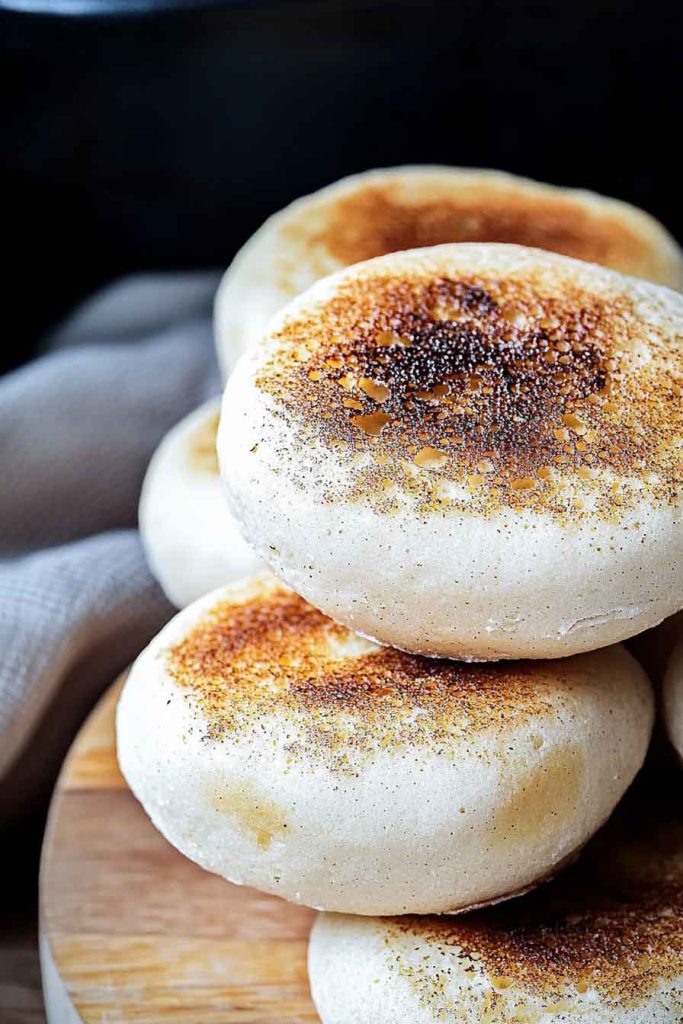
Once you make sourdough English muffins at home, those store-bought ones in the plastic bag? They’ll never be the same.
These muffins have everything you want. Those iconic nooks and crannies that catch melted butter in every little pocket. That tangy sourdough flavor. And honestly? They’re not even hard to make.
The best part? Your sourdough starter does most of the work while you sleep.
Why You’ll Actually Want to Make These
Here’s what sold me on this recipe:
- The dough works overnight. Mix it before bed. Wake up to bubbly, fermented dough that’s ready to go. No babysitting required.
- That texture though. Cooking these on a griddle creates those little pockets that make English muffins English muffins. You know what I’m talking about.
- They taste better. Period. Fresh and warm with real sourdough tang beats the packaged stuff every single time.
- Your wallet will thank you. Active starter plus basic pantry staples equals a dozen muffins. Do the math.
- Freeze them. Make a big batch. Pull them out all month. Toast them straight from the freezer.
What You Need to Know Up Front
Time breakdown:
Prep Time: 20 minutes (then you sleep)
Cook Time: 20 minutes
Total Time: About 8-9 hours (but you’re only actually working for maybe 40 minutes)
How many you’ll get:
12 English muffins. Perfect for a week of breakfasts or feeding a crowd at brunch.
Skill level:
Easy.
If you can feed your sourdough starter, you can make these. I promise.
Kitchen Tools You’ll Need
Nothing fancy here:
- Mixing bowl
- Wooden spoon or spatula
- Kitchen scale (helpful but not required)
- Rolling pin
- 3-inch round biscuit cutter (or just use a drinking glass)
- Griddle or large skillet
- Spatula
- Wire cooling rack
- Clean kitchen towel
The Ingredients
Mix These the Night Before:
- Active sourdough starter (1 cup/227g): Make sure it’s bubbly and recently fed. This is key.
- Honey (2 tablespoons/42g): A little sweetness helps the yeast do its thing.
- Milk (1 cup/240ml): Whole milk is best, but use what you’ve got.
- All-purpose flour (2 cups/250g): This creates the structure.
Add These in the Morning:
- Baking soda (3/4 teaspoon): Cuts the acidity. Makes them lighter.
- Salt (1 teaspoon): For flavor and strength.
- All-purpose flour (1/2 cup/63g): This brings the dough together.
For Cooking:
- Cornmeal, semolina, or farina: That classic dusting. Prevents sticking. Makes them look legit.
Ways to Mix It Up
Want to experiment? Try these:
- Whole Wheat Version: Swap half the all-purpose flour for whole wheat. Heartier. More rustic.
- Add Seeds: Toss in sesame seeds, poppy seeds, or sunflower seeds.
- Cinnamon Raisin: Sweet breakfast treat vibes. Kids love these.
- Cheese and Herb: Fold in shredded cheese with rosemary or thyme. So good.
- Multigrain: Use rye, spelt, or oat flour. Get creative.
How to Make Them (Step-by-Step)
1. Mix the Overnight Dough
The night before you want these…
Grab your mixing bowl. Combine your active sourdough starter, honey, milk, and all-purpose flour.
Stir it up.
You’ll get a thick, sticky batter. That’s perfect.
Cover it with a clean kitchen towel. Leave it on your counter.
Now go to sleep. Let that wild yeast work its magic for 8 hours.
2. Add the Morning Ingredients
Wake up.
Check your dough. It should look alive. Bubbly. Active.
Sprinkle the baking soda, salt, and that extra half cup of flour on top.
Mix it all together with a wooden spoon. The dough will be soft and slightly sticky.
But manageable. You’ve got this.
3. Shape the Muffins
Dust your work surface with cornmeal. Be generous.
Turn the dough out. Pat it gently into a rectangle.
About half an inch thick.
Grab your 3-inch cutter. Start punching out circles.
Gather the scraps. Pat them out again. Keep cutting until you have 12 muffins.
Dust the tops with more cornmeal.
4. Let Them Rest
Place those cut muffins on a baking sheet. Make sure it’s dusted with cornmeal too.
Cover them loosely with a towel.
Let them rest for 30 minutes.
This short rest? It helps them puff up before you cook them. Don’t skip it.
5. Cook on the Griddle
Heat your griddle or large skillet over medium-low heat.
Here’s the thing. You want gentle, even heat. Too hot and the outside burns before the inside cooks.
Place the muffins cornmeal-side down. Leave space between each one.
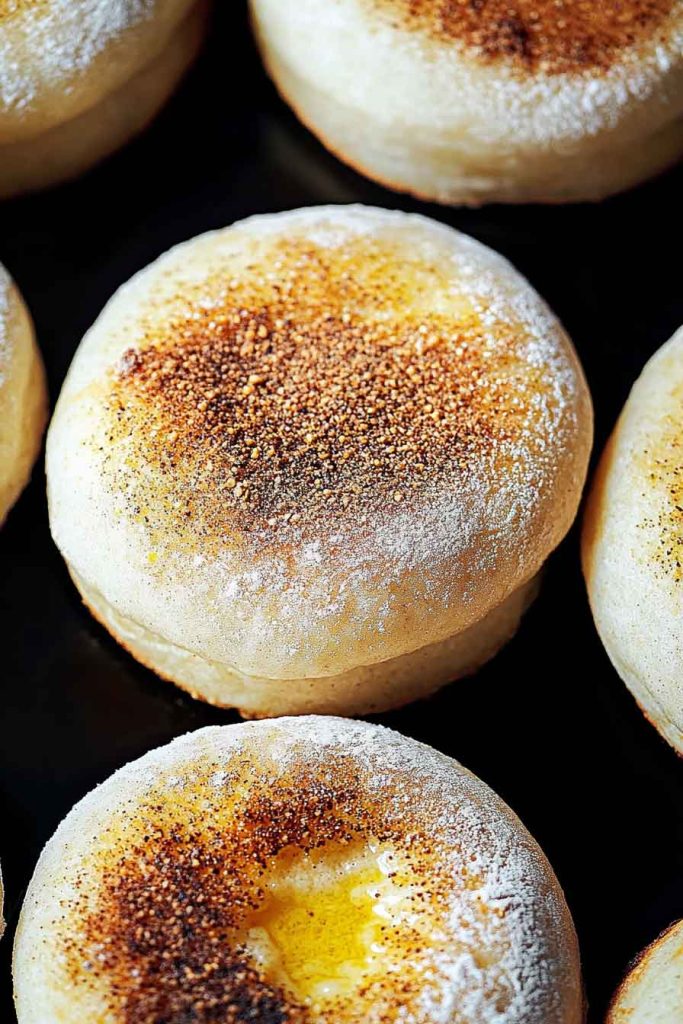
Cook for 7-10 minutes on the first side. You’re looking for golden brown.
Flip them.
Cook another 7-10 minutes on the second side.
They should feel firm when you press them gently.
6. Cool and Split
Move the cooked muffins to a wire rack.
Let them cool completely.
Now here’s the important part. Use a fork to split them open around the sides.
Not a knife. A fork.
This creates those perfect nooks and crannies. That’s what makes English muffins special.
How to Serve These
So many options:
- Classic Toast: Split them. Toast until golden. Slather with butter and jam. Simple perfection.
- Breakfast Sandwiches: Layer with eggs, cheese, bacon or sausage. Weekend breakfast sorted.
- Eggs Benedict: Use these as the base for poached eggs and hollandaise. Fancy brunch at home.
- Mini Pizzas: Top with sauce, cheese, whatever you want. Broil until bubbly. Kids go crazy for these.
- Avocado Toast: Mashed avocado, salt, red pepper flakes. You know the drill.
Storing Them
Room Temperature: Airtight container or bag. Good for up to 3 days.
Refrigerator: Keep them in the fridge for up to a week if your kitchen runs warm.
Freezer: This is where it’s at. Freeze them in a freezer bag for up to 3 months.
Toast directly from frozen. Instant breakfast. You’re welcome.
Tips I Learned the Hard Way
- Use Active Starter: Seriously. Make sure it’s bubbly and active. Dead starter = flat muffins.
- Don’t Skip the Rest: Those 30 minutes matter. The muffins puff up better.
- Low and Slow: Cook over medium-low heat. This ensures the insides cook through without burning the outside.
- Fork Split Only: Always. Always. Use a fork instead of a knife. This creates that texture that holds butter perfectly.
- Test the Heat: Your first muffin is a test run. Too fast? Lower the heat. Too slow? Turn it up a bit.
- Even Thickness: Roll the dough to an even half-inch. All your muffins will cook at the same rate.
Nutrition Facts
| Nutrient | Per Muffin |
|---|---|
| Calories | 140 |
| Total Fat | 1g |
| Saturated Fat | 0.5g |
| Cholesterol | 3mg |
| Sodium | 250mg |
| Total Carbohydrates | 28g |
| Dietary Fiber | 1g |
| Sugars | 3g |
| Protein | 4g |
These are approximate. Your actual numbers might vary depending on ingredients.
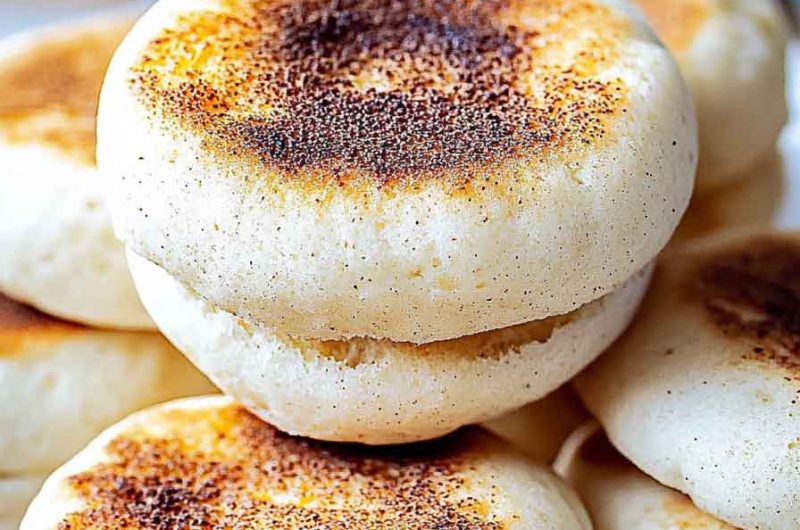
Homemade Sourdough English Muffins
Course: Breakfasts12
servings20
minutes140
kcalIngredients
- The Night Before:
1 cup (227g) active sourdough starter, bubbly and fed
2 tablespoons (42g) honey
1 cup (240ml) milk, warmed to room temperature
2 cups (250g) all-purpose flour
- The Next Morning:
3/4 teaspoon baking soda
1 teaspoon salt
1/2 cup (63g) all-purpose flour
- For Cooking:
Cornmeal, semolina, or farina for dusting
Directions
- Mix Overnight Dough: The night before, combine active sourdough starter, honey, warm milk, and 2 cups all-purpose flour in a mixing bowl. Stir until well combined into a thick batter. Cover with a towel and let sit at room temperature for 8 hours or overnight.
- Add Morning Ingredients: In the morning, sprinkle baking soda, salt, and remaining 1/2 cup flour over the bubbly dough. Mix with a wooden spoon until everything comes together into a soft, slightly sticky dough.
- Shape Muffins: Dust your work surface with cornmeal. Turn dough out and pat gently to about 1/2-inch thickness. Use a 3-inch round cutter to cut 12 circles, re-rolling scraps as needed. Dust tops with cornmeal.
- Rest: Place cut muffins on a cornmeal-dusted baking sheet. Cover loosely and let rest for 30 minutes.
- Cook: Heat griddle or skillet over medium-low heat. Cook muffins for 7-10 minutes per side until golden brown and cooked through. They should feel firm when pressed gently.
- Cool and Split: Transfer to a wire rack to cool completely. Split with a fork around the edges to create nooks and crannies.
Questions You Might Have
Can I make these without a sourdough starter?
Not really. The whole point is the sourdough flavor and rise. You’d need to use yeast instead, which makes this a completely different recipe.
Why does the dough sit overnight?
Two reasons.
First, that long fermentation develops the tangy sourdough flavor.
Second, it makes the grains easier to digest. Plus the wild yeast needs time to create that light, airy texture.
Can I just bake these in the oven?
You could. But you’d lose what makes them special.
Traditional English muffins are cooked on a griddle. That’s what creates their unique texture. Baking them turns them into something more like biscuits.
My muffins are doughy in the middle. What happened?
Your heat was too high.
The outside cooked before the inside was done. Lower your temperature next time. Cook them slower.
How do I know when they’re done?
They should be golden brown on both sides. Firm when you press them gently.
Want to be sure? Check with a thermometer. Internal temperature should hit about 190°F.
Final Thoughts
Here’s the truth.
Homemade sourdough English muffins bring something special to your breakfast table. That perfect tangy flavor. Those iconic nooks and crannies.
The overnight fermentation does most of the work. You sleep. The dough develops flavor.
Then gentle griddle cooking creates a texture that store-bought muffins just can’t touch.
Toast them for a simple breakfast. Build an elaborate eggs benedict. Either way works.
These will become a staple in your sourdough routine.
I recently made a batch for weekend brunch with friends. We went through all 12 in one sitting. Everyone kept saying they tasted like what English muffins are supposed to taste like.
And they’re right.
Once you taste the difference, packaged English muffins won’t cut it anymore.